
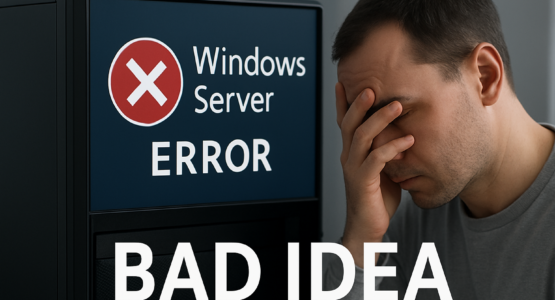
Setting up a server in your house sounds like a power move, doesn’t it? The idea of taking full control of your network, having centralized storage, and spinning up virtual machines whenever you want is genuinely exciting. But let’s be real—the dream of running Windows Server at home often collides headfirst with reality. It’s one of those projects that looks great on paper and then slowly turns into a time-sucking monster. I’ve seen it happen, and honestly, it’s a tale as old as tech itself.
The initial phase is always the fun part. Installing Windows Server on a dedicated machine goes surprisingly smoothly. The wizard holds your hand through every step, and within a couple of hours, you’ve got a legitimate server humming away in your spare room or closet. It feels empowering. Next up is configuring Active Directory to manage user accounts and permissions. This is where you start to feel like a real IT pro. The interface is familiar if you’ve ever poked around Windows before, and the logic behind centralizing control over your home network makes total sense. You’re thinking, “This is it. This is the future.”
File sharing comes together using the Server Message Block (SMB) protocol. Setting up shared folders is straightforward, and you can fine-tune permissions to your heart’s content. You also get Internet Information Services (IIS) running for hosting personal websites or web apps, which feels incredibly slick. And then there’s Hyper-V. The ability to create virtual machines on demand is genuinely impressive. You can test software, experiment with different operating systems, and break things without any real consequences. For a tech enthusiast, this is heaven. But here’s the catch—the honeymoon phase doesn’t last.
When the Honeymoon Phase Ends
Hardware compatibility becomes a brick wall pretty quickly. Some devices simply don’t have drivers for Windows Server. Printers, network adapters, and even certain graphics cards just refuse to cooperate. You’ll find yourself scouring manufacturer websites, hoping for a server-specific driver that often doesn’t exist. It’s frustrating, and it eats into time you could be spending on literally anything else. You start to wonder if the payoff is actually worth the grind.
Software compatibility is another beast entirely. Applications that run fine on Windows 10 or 11 often won’t install on the server. Some crash immediately, while others behave erratically or refuse to launch at all. This is particularly annoying when you’re dealing with tools you rely on daily. The server environment is built for enterprise workloads, not the eclectic mix of software a typical home user wants to run. You can’t just install anything and expect it to work—you have to check compatibility, hunt for alternatives, or give up entirely.
Then comes the update nightmare. Windows Server updates are more complex and far less user-friendly than consumer editions. The process demands careful planning. Sometimes updates fail, sometimes they cause unexpected issues, and sometimes they just hang there, mocking you. The constant monitoring and patching is a massive drain on time and patience. It genuinely feels like a part-time job just to keep the system secure and stable. And if you’re not diligent, you’re leaving your network vulnerable.
Performance and Resource Demands
Performance issues are the final nail in the coffin. The server’s resource consumption is higher than you’d expect. Even on a decent machine, Windows Server hogs CPU and memory, which affects everything else on your network. Streaming becomes laggy, gaming turns sluggish, and even basic web browsing feels off. The server is essentially stealing resources from the devices that actually matter to you. That’s a hard pill to swallow when your primary goal was to improve your setup, not degrade it.
After weeks of wrestling with these issues, the time and effort required to maintain the server clearly outweigh any benefits. The initial excitement fades into a sobering realization: running Windows Server at home is not meant for residential environments. Its powerful features come with a price tag of complexity and resource demands that are simply too heavy for a typical household. It’s not that the software is bad—it’s just the wrong tool for the job.
If you’re thinking about making this leap, take a hard look at your actual needs. If you want centralized file storage and backup, a consumer-grade NAS device is probably a much better fit. These gadgets are designed with home users in mind, offering user-friendly interfaces and lower power consumption. Cloud services like Google Drive or Dropbox provide convenience and accessibility without the hardware headaches. There are plenty of lightweight alternatives that give you control without the constant maintenance grind.
So, what’s the takeaway here? Running Windows Server at home is an educational experience, sure, but it’s also a lesson in practicality. It teaches you why enterprise tools don’t always translate well to personal use. The key is to match the solution to the problem, not the other way around. Don’t force a square peg into a round hole just because it looks cool. Instead, pick tools that genuinely serve your needs without turning your life into a never-ending troubleshooting session.
At the end of the day, the best tech is the tech that works for you—not the tech that demands you work for it. There’s a reason why most people don’t go down this path, and it’s not for lack of ambition. It’s because the juice isn’t worth the squeeze. Save yourself the headaches and explore smarter options that deliver the functionality you crave without the baggage. Check out more AI and Tech related Articles here.
