
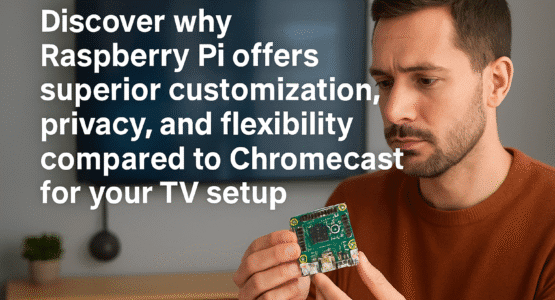
The Evolution of TV Streaming: Raspberry Pi vs Chromecast
Remember when Chromecast first hit the scene? It was like a magic wand for our TVs, transforming those aged screens into modern entertainment hubs. Who would’ve thought an old TV could suddenly stream Netflix, YouTube, and a plethora of other services? It was like finding a portal to a new world. For a long time, Chromecast was the go-to gadget for anyone eager to breathe new life into their aging displays. But, alas, times have changed. Enter the Raspberry Pi, a nifty little device offering more flexibility and control than Chromecast could ever dream of.
A Tale of Two Philosophies
At the heart of the Raspberry Pi vs Chromecast debate lies a fundamental difference in philosophy. Chromecast is like a trusty old screwdriver—designed for a singular purpose: to stream content from your devices straight to your TV. It’s dependable, simple, and gets the job done. But if you’re someone who craves a bit more freedom, Chromecast might feel a tad restrictive. You’re tied to Google’s ecosystem, limited to the apps they offer, and customization? Forget it. Plus, there’s the whole data collection thing—like it or not, it’s part of the deal.
Now, picture the Raspberry Pi as a blank canvas waiting for your creative touch. It’s a mini-computer, affordable and versatile, ready to be shaped to your whims. Unlike Chromecast, it’s not married to one operating system. Whether it’s OSMC, LibreELEC, or LineageOS, you have a buffet of choices. Don’t like the flavor? Just pick another. It’s this adaptability that makes the Raspberry Pi genuinely powerful, especially when your tech needs evolve over time.
Media Center Marvel: A Raspberry Pi Advantage
One of the standout benefits of opting for a Raspberry Pi is the ability to run a full-fledged media center. With Kodi, the darling of open-source media software, you can curate your media library just the way you like it. Think playlists, custom artwork, personalized categories, and themes. Want a private media server? Stream from local storage? Or add those nifty add-ons Chromecast can only dream of? The Raspberry Pi says, “Go ahead!” And if things go awry, you can actually troubleshoot the problem instead of throwing your hands up in despair.
Privacy at the Forefront
Privacy, anyone? With a Raspberry Pi running open-source software, you can watch TV without being dragged into mandatory sign-ins or telemetry agreements. Add Pi Hole, and you can block trackers and ads across your entire network. It’s your world, run on your terms. Meanwhile, Chromecast is busy harvesting your viewing data as part of its normal routine—a reality you can’t tweak.
Adapting to the Future
Old TVs, like people, have a tendency to slow down with age. A smart TV from half a decade ago may struggle, leaving you grumbling at its sluggishness. Here’s where the Raspberry Pi truly shines. If it ever gets underpowered, just switch to a lightweight operating system built for older hardware. The community behind these projects is like a trusty sidekick, often supporting older versions long after manufacturers have waved goodbye. In contrast, Chromecast might ditch support for older models, leaving you scratching your head.
Unlimited Storage and App Choices
Storage and apps? Chromecast offers limited storage and confines you to Google’s app store. Meanwhile, a Raspberry Pi throws open the gates. Connect external hard drives, webcams, keyboards, TV tuners—you name it. You’re not boxed in by corporate decisions about what you should or shouldn’t access.
The Final Choice
Ultimately, the choice between Raspberry Pi vs Chromecast boils down to what you value most. Craving simplicity and okay with limited customization? Chromecast will serve you well. But if you seek genuine control, privacy, and the ability to mold your setup to your ever-changing needs, the Raspberry Pi is your hero. It’s more than just a streaming device—it’s a platform you can tailor to fit your personal tech landscape.
For a deeper dive into why the Raspberry Pi might be a better choice than Chromecast, click here.
Curious about more AI and Tech related insights? Check them out here.
