
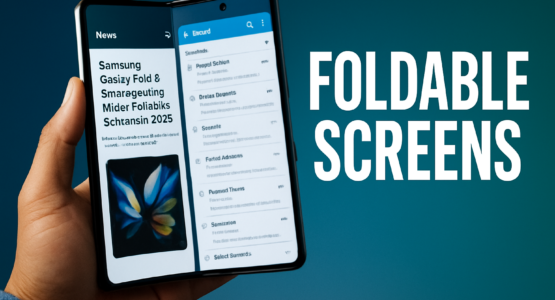
The foldable smartphone market is about to get a whole lot more interesting. For years, we’ve been putting up with those narrow, awkward outer displays that made typing feel like a game of chance. Finally, manufacturers are listening to user feedback. The trend for 2025 is crystal clear: wider foldable screens are taking over, and Samsung is leading the charge.
Let’s be honest—the first wave of foldables was a mixed bag. Sure, the technology was impressive, but that cramped cover screen? It was a constant source of frustration. Trying to reply to a text or quickly glance at a map felt like squeezing into a pair of shoes that were half a size too small. It just didn’t work well. Now, Samsung is preparing a significant redesign of its Galaxy Fold line. The upcoming Galaxy Fold 8 is expected to feature a much wider cover screen, addressing one of the biggest complaints about earlier models. That narrow outer display made typing and browsing feel cramped. Now, Samsung is betting that a wider, thinner form factor will redefine what consumers expect from a foldable phone.
This design shift is Samsung’s boldest move in the foldable market since the original Galaxy Fold debuted back in 2019. The wider aspect ratio isn’t just about looks—it’s about functionality. Multitasking becomes far more practical when you have more screen real estate on the cover display. Users can run two apps side by side without feeling squeezed. It’s a change that aims to enhance the overall user experience. Imagine checking your calendar while drafting an email, all without unfolding the phone. That’s the kind of seamless workflow these wider foldable screens promise.
But Samsung isn’t alone in this push. Competition is heating up faster than a smartphone processor under a heavy gaming session. Huawei has already launched the Pura X Max, a device with a tablet-like design that sets a new precedent. Meanwhile, Apple is rumored to be developing its own wide foldable iPhone, potentially launching in late 2026. That would only intensify the race. The wider foldable screen trend reflects a broader industry shift towards devices that bridge the gap between smartphones and tablets. It’s no longer just about having a phone that folds; it’s about having one that truly enhances how you interact with content.
Why the Sudden Focus on Width?
Why the sudden focus on width? It’s a question worth asking. Because consumers want larger displays without sacrificing portability. A wider foldable screen gives you more room for reading, watching videos, or working on documents, yet it still folds down to a pocket-friendly size. It’s a clever compromise that could appeal to anyone who finds standard phones too small but tablets too bulky. Think about it—how many times have you wished your phone had just a little more screen space for that spreadsheet or movie? The answer, for many of us, is “all the time.”
Of course, success won’t come easy. The viability of these wider foldable devices depends on several factors. Durability is a major concern—foldable screens have to withstand thousands of folds without cracking. Battery life is another challenge; larger displays consume more power. And software optimization is crucial. Apps need to adapt seamlessly to the new aspect ratios, or the experience will feel clunky. There’s nothing worse than an app that leaves huge black bars or cuts off critical buttons because it wasn’t designed for the screen shape. Manufacturers have their work cut out for them.
Samsung’s strategic focus on wider foldable screens signals a commitment to innovation. The company is clearly listening to evolving consumer demands. But the wider trend is expected to influence the entire mobile device market. Other manufacturers will likely reconsider their own design strategies to keep up. It’s a domino effect—once one major player makes a bold move, the rest have to follow or risk being left behind. The return of the wide fold is a topic that’s generating a lot of buzz, and for good reason.
Consumer Reception and the Road Ahead
Consumer reception will play a crucial role. If people embrace these wider foldables, we could see a rapid shift in what a smartphone looks like. If not, manufacturers may need to go back to the drawing board. Either way, the development involves overcoming technical hurdles related to display durability, hinge mechanisms, and battery efficiency. It’s a high-stakes game of innovation where the winners could reshape the entire industry.
The competitive landscape is evolving fast. Samsung, Huawei, and Apple are all leading the charge in design innovation. With wider foldable screens becoming the new battleground, 2025 promises to be a pivotal year for mobile technology. The return of the wide fold is here, and it’s set to change how we use our phones. Whether you’re a early adopter or a cautious observer, this is a trend worth watching closely.
Check out more AI and Tech related Articles here.
