
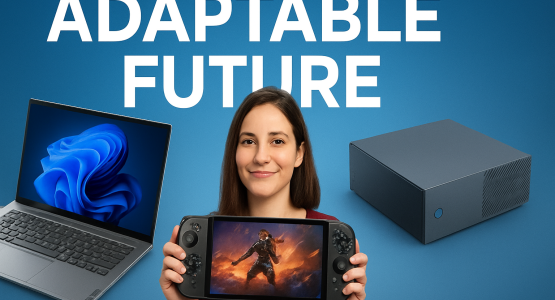
Every year, Mobile World Congress (MWC) throws up a mix of the genuinely exciting and the slightly absurd. This year, Lenovo stepped up to the plate with a trio of concepts that, frankly, got me thinking about the future of my own tech setup. These Lenovo MWC concepts aren’t just about chasing a headline; they feel like a genuine attempt to solve problems we all face daily, like that sinking feeling when your trusty laptop just can’t handle the latest update anymore.
The real showstopper was the ThinkBook Plus Gen 4 concept, which takes the idea of modularity and runs with it. Imagine a world where you’re not locked into the hardware you bought on day one. This laptop concept lets you swap out the CPU, GPU, and even the battery. Think about that for a second. Instead of shelling out for a whole new machine because your processor is ageing, you could just… upgrade it. It’s a breath of fresh air for anyone who’s ever felt held hostage by planned obsolescence.
This design philosophy isn’t just about gadget geeks getting to play with new parts. It’s a massive nod to sustainability, something that’s becoming impossible to ignore. By championing repairability and upgradability, Lenovo is tackling the elephant in the room: the mountain of electronic waste we generate. It’s a move towards a more circular economy, where we design things to last and evolve, rather than be tossed aside. It makes you wonder why we ever accepted anything less, doesn’t it?
AI Gets a Hardware Home
Then there’s the AI PC concept, which is less about a specific form factor and more about what’s under the hood. By baking a dedicated AI chip directly into the hardware, Lenovo is looking to accelerate machine learning tasks in a way we haven’t seen before. This isn’t just about making things run faster for the sake of it; it’s about enabling new workflows. Real-time transcription, seamless image generation, and even intuitive voice and gesture controls become the norm. I remember a time when waving your hand at a screen felt like science fiction, but these Lenovo MWC concepts make it feel like an inevitability. It points to a future where AI is a silent, omnipresent partner in our daily grind, not just a novelty chatbot.
On the flip side, for the gamers out there, the Legion Go is a delicious piece of hardware. This foldable gaming handheld packs a 7.8-inch OLED display that folds in half, making it genuinely portable. The detachable controllers are designed to give you that console feel, whether you’re squeezed into a train seat or sprawled on the sofa. And with Wi-Fi 6E and 5G on board, cloud gaming is ready to roll wherever you have a signal. Lenovo has also been working on new foldable display tech to keep that pesky crease at bay, which is a huge win because that’s often the biggest compromise with foldables.
What strikes me most about these Lenovo MWC concepts is the common thread of adaptability. We’re moving away from the one-size-fits-all approach. The ThinkBook Plus Gen 4, for instance, also has a secondary e-ink display on the lid. It’s a brilliant, low-key addition that lets you check notifications or jot down a quick idea without the battery-draining glow of the main screen. It’s those thoughtful details that make a difference for busy people who want to stay connected but not constantly interrupted.
Of course, we have to keep our feet on the ground. These are concepts, not retail products you can order tonight. But Lenovo has stated they’re serious about developing these ideas, with a clear eye toward bringing some of these features to commercial devices down the line. The heavy investment in AI and modular design is a loud and clear signal of where they see the future of the PC. Whether it’s a laptop that can grow with you for years or a gaming rig that folds into your pocket, the message is clear: the future of computing is set to be more personal, more sustainable, and unapologetically intelligent.
Check out more AI and Tech related Articles here.
