
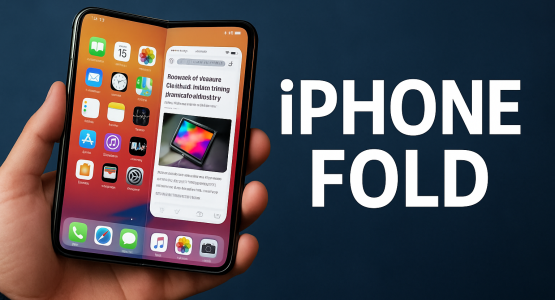
Foldable phones have been kicking around for a few years now, but let’s be honest—they’ve never quite felt finished. Samsung, Huawei, and a handful of others have pushed the category forward, yet the same gripe keeps surfacing: the software just doesn’t feel right. Apps stretch awkwardly, multitasking turns into a mess, and the whole experience shifts too much when you open or close the thing. That’s exactly where Apple might finally make a difference. Word on the street is that the company is working on an iPhone Fold, and if the rumors hold up, it could solve the user interface headaches that have held foldables back.
Why Foldable UI Has Been a Headache
Right now, foldable devices often suffer from inconsistent app experiences. You might open an app on the outer screen, unfold the phone, and watch the layout break or reset. UI glitches are common, and developers struggle to make their apps look good on both the small and large displays. It’s a problem that’s kept foldables in a niche corner, loved by early adopters but avoided by everyone else.
Apple’s approach, according to reports, may involve building a seamless UI that adapts fluidly between folded and unfolded states. Instead of forcing apps to guess what to do, iOS could handle the transition smoothly, so the screen just works. Honestly, that’s the dream, isn’t it? You shouldn’t have to think about whether your phone is folded or not.
That kind of polish is exactly what Apple is known for. The company has a long history of integrating software and hardware tightly, which could help it overcome the foldable UI issues that others haven’t cracked. Think about how the iPad handles multitasking, or how the iPhone switches between portrait and landscape without a hiccup. Apple’s expertise in that area could translate well to a foldable.
The iPhone Fold is likely to focus on optimizing multitasking and app continuity, meaning you could start a task on the cover screen and finish it on the main display without missing a beat. I remember the first time I used a foldable from another brand—I opened a note on the outer screen, unfolded it, and the app just froze for a second before reloading. That kind of thing kills the magic. Apple’s rumored solution sounds like it would eliminate that stutter entirely.
What the Rumors Say About the iPhone Fold
Rumors suggest the device might feature a flexible OLED display that folds inward or outward. Either way, the goal is the same: a big screen that fits in your pocket. Apple is reportedly testing prototypes internally to refine the foldable user experience, and the company may leverage iOS enhancements specifically designed for foldable form factors. That could include new gestures, split-screen modes, and better ways to manage multiple apps at once. It’s not just about the hardware; it’s about making the software feel natural.
For a deeper look at how Apple might perfect the UI for foldables, there’s a great breakdown over at MobileSyrup that dives into the specifics. It’s worth a read if you’re curious about the technical side.
The iPhone Fold could also support existing Apple ecosystem features like Face ID and Apple Pencil. That would make it feel like a true part of the family, not a strange experiment. And durability might get a boost too, with improvements in hinge mechanisms compared to current foldables. Those are the kinds of details that matter when you’re spending a lot of money on a device that bends.
Apple Isn’t First, But That Might Not Matter
Of course, Apple isn’t first to the party. Samsung and Huawei have been selling foldables for years, and they’ve learned a lot along the way. But analysts believe Apple’s entry into foldables could accelerate mainstream adoption of the technology. When Apple does something, people pay attention. The iPhone Fold is expected to compete directly with those existing brands, but with a focus on getting the UI right. No official release date is confirmed, though rumors suggest the device might launch within the next few years.
So what’s the hold-up? Well, Apple tends to take its time. It waits until it can do something well rather than rushing a half-baked product out the door. That strategy has worked before—just look at the Apple Watch or AirPods. Neither was first, but both ended up dominating their categories.
If Apple pulls it off, the iPhone Fold could set new standards for the industry. A foldable that doesn’t make you think about the fold, that just works like a normal phone until you need more screen, would be a big step forward. The company’s foldable UI innovations might finally make foldables feel like the future, rather than a work in progress. For anyone who’s been waiting for a foldable that feels as polished as a regular iPhone, that’s a promising thought.
Check out more AI and Tech related Articles here.
